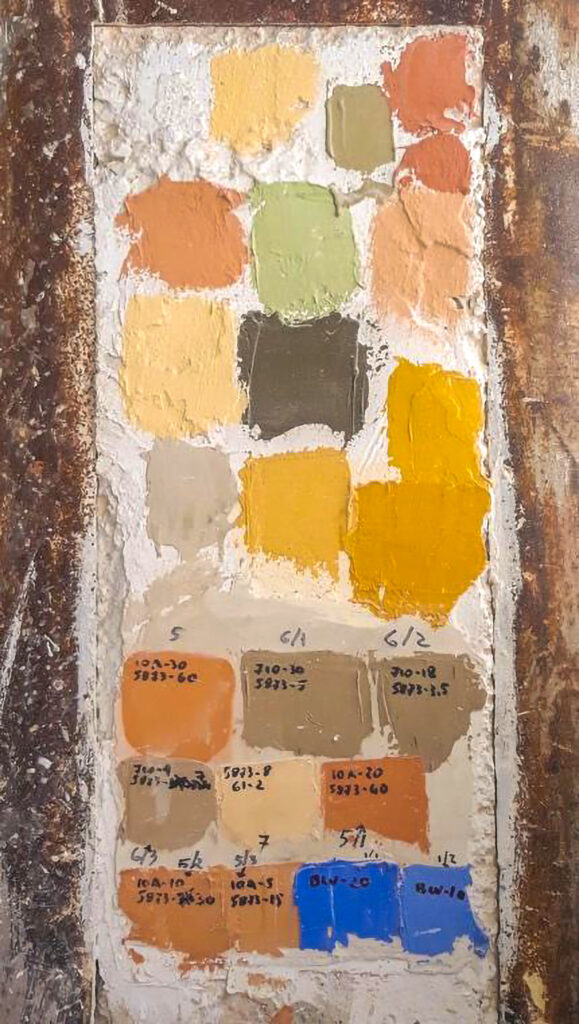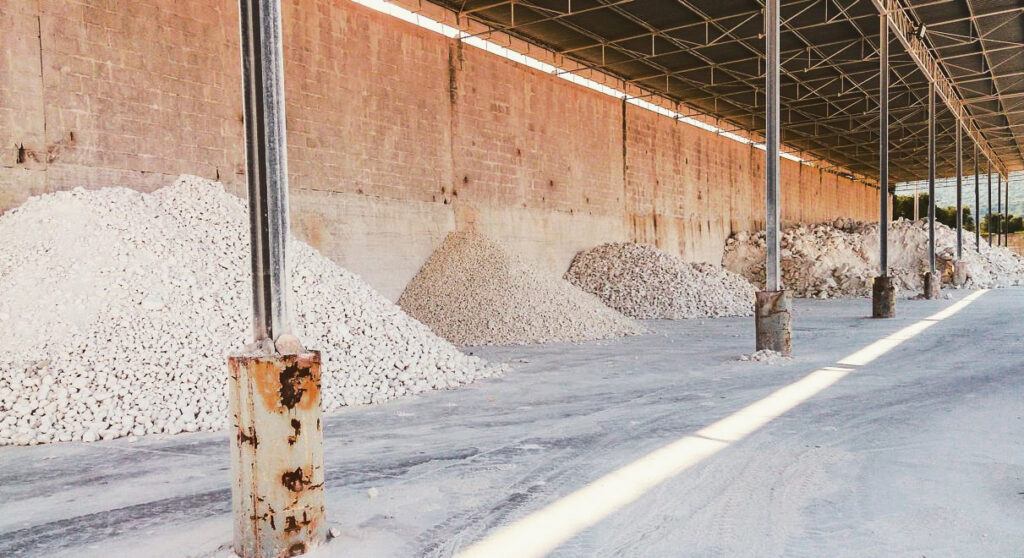
Calce (lime plaster) is a living material, which ironically or not, is made from the exoskeletons of untold numbers of long dead sea creatures stuck in limestone from multi-millennia past. It brings to life the calcium carbonate in the tiny bones by grinding, roasting, and slacking (a very slow soak that takes years) until it resembles a paste that is no longer inert and breathes and soaks up the atmosphere around it.
I have been in love with how pigmented plaster delivers a mellow, yet intense colored surface for a very long time. I became fascinated by the relationship of color to plaster as it appeared on old walls on my first trip to Rome when I was 19. A few years later, living and working in Perugia, in the middle of Italy, I began experimenting with using plaster and powder pigments to make paintings.
A half-century later, finding myself living in an ancient Pugliese town made entirely from limestone, I realized I had to properly teach myself how to make paintings with the stuff. Since lime plaster is ground limestone, I was surrounded by the stone from morning to night.
Asking around, I learned about Calce Viva, about a 45 minute drive from our town. Calce Viva produces the highest quality of lime plaster using old world methods. We went there and the kind young man in the office took pity on my lack of knowledge and set me on a steady course of discovery. Over the past decade, I’ve returned many times.
Since the end of WWll, the workers at Calce Viva have been roasting it in brick wood-fired ovens, as it has been done traditionally in Italy for centuries.
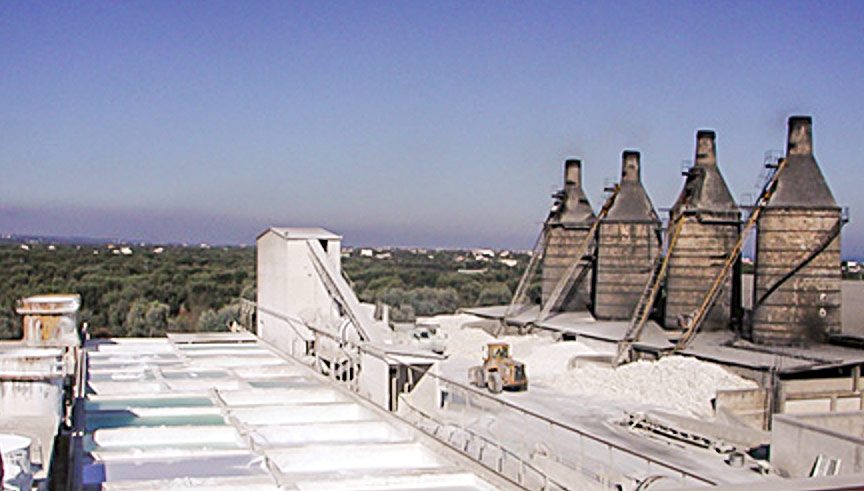
However, even while the calce they’ve produced lives slathered on walls all over Italy, the company making it may soon no longer exist. When a person dies in Italy, it is said, non c’e piu’– and Calce Viva will be no more. Founded by a falegname– a woodworker, whose business generated too much scrap, he decided to try and find a way to use it. His son (the uncle of the brother and sister who are now retiring) went to school to learn how to make plaster in the old way, and with his father bought up adjoining properties so that they would have enough room to produce dimensioned lumber and have storage buildings for the limestone and the kilns and ponds for slacking.
Over the past few years, I’d noticed that the very large site was less and less busy, and this time, when I showed up to get my annual supply of ultra-fine marmarino, the signora (the only one in the office) told me that that there was nobody out in the ‘back lot’ because they were in fiere, on holiday…except that it was a very strange time for that.
I pressed my case: gesticulating, getting overly dramatic and sighing deeply, as I have long been known to do here in Southern Italy when necessary (i.e. when showing up at a museum ‘closed for restoration’ on Ischia, or at a historic tonarra in Favegnana in Sicily which was also closed for work even though none seemed to be happening). In this case I was passionately explaining that I’d borrowed a car, and driven 45 mins, to come get my yearly supply of their fabulous product (which was all true).
Reaching for the heavens, she also sighed and called her brother who, she said, was on his way. She bade me sit down in the office and cool my jets. Time slowed down considerably. Finally, tired of being cooped up while she entered numbers in her computer, I went outside to await his arrival and found him sitting in his parked car on the phone.
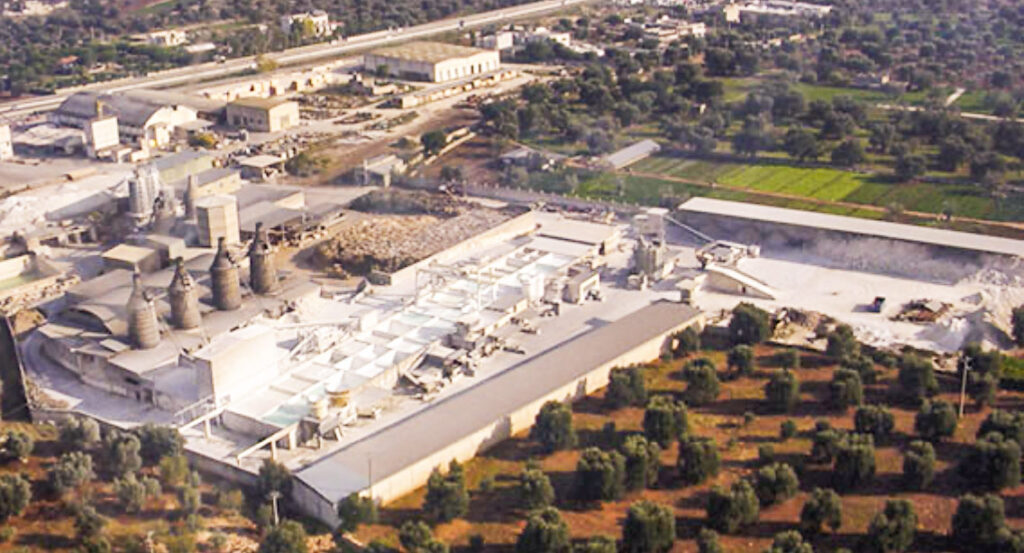
Together we drove the length of the large site to the supply building and located what I was looking for. During my time with him, he told me they are selling the business and said I should call back in a month or so to see what will be happening next…which I will surely do. If they completely close, I will need to find another source of my materia prima. In the meantime, I’ll try to stock up.
Apparently, the last generation at Calce Viva did too much slacking of their own. Their hand-produced, multi-step processed lime plaster cost considerably more than industrially produced plasters and yet was the perfect product for expensive historic remodels. Seemingly they failed to market themselves sufficiently to those who could/would/should use it. Plaster endures, but family businesses have a way eventually of ceasing to exist. In any case, my involvement with them taught me how to use lime plaster integrated with color and I am immensely grateful that I learned the process using an outstanding product. It is always easiest and best to learn using the finest materials available.